Mona Lisa: what makes the portrait special?
The Mona Lisa is Leonardo da Vinci’s portrait of Lisa Gherardini. Its effect depends on more than the famous smile. The hands, gaze and landscape invite you to move between the intimate presence of a person and a distant world.
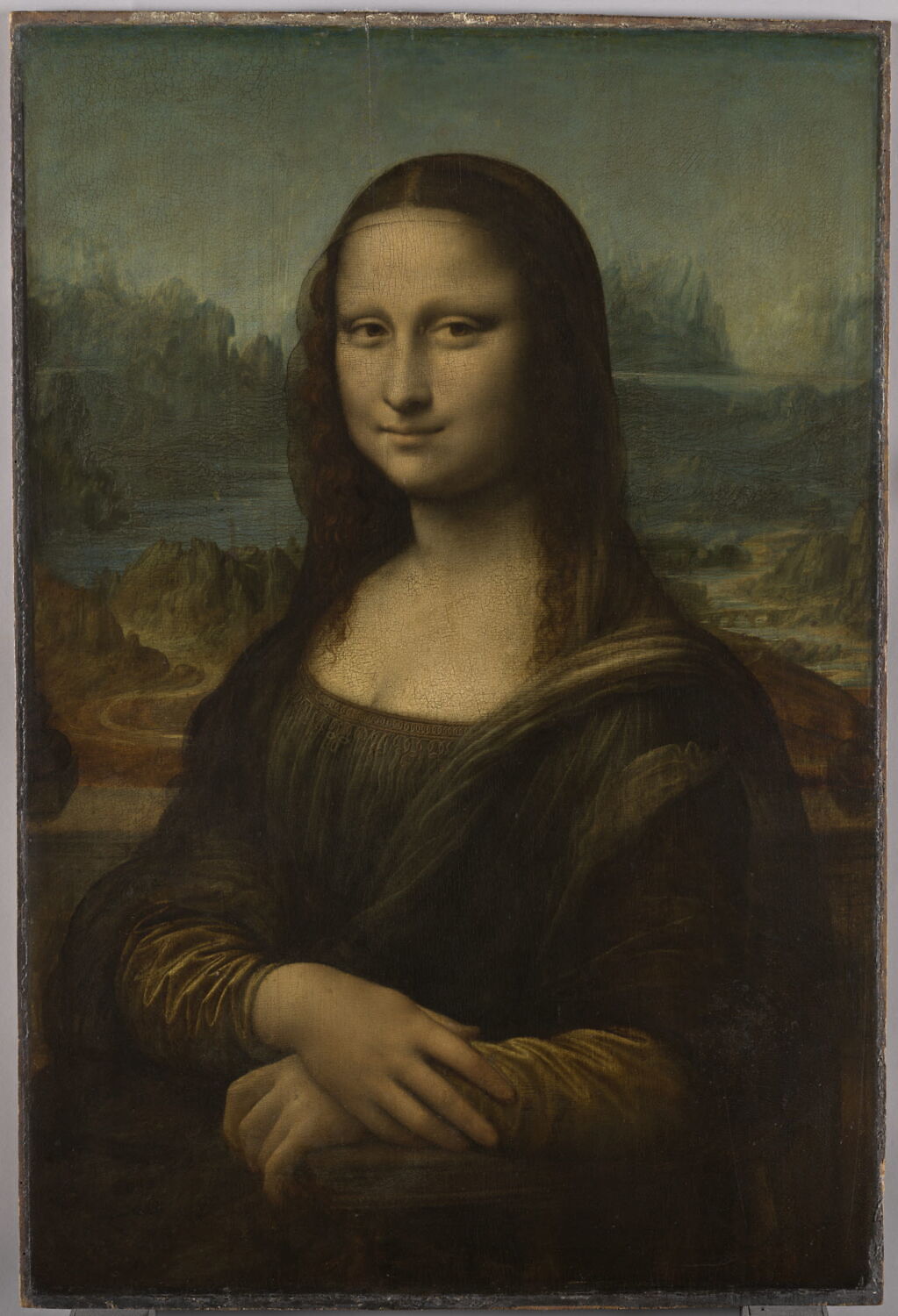
Looking at the smile
Look first at the mouth, then at the whole face. Does the expression seem unchanged? Soft transitions between light and shadow are less definite than a sharp outline. The term sfumato describes this smoky effect. Rather than deciding on a single emotion, notice how your impression changes as you look.
Hands and landscape
The overlapping hands create a quiet area in the foreground. Follow the arms upwards towards the face, then let your eyes wander into the landscape. Roads, water and distant heights open up a very different space behind the sitter. The contrast between the nearby figure and the faraway background offers a useful starting point for your own reading.
A question at the painting
Imagine covering the lower half: would the portrait feel as calm without the hands? Give this comparison a moment instead of trying to take in every detail at once.
Artwork record and source
An original Louvr introduction, created with AI assistance. Artwork facts checked against the linked museum catalogue. Interpretations are suggestions for looking. Check the catalogue for the current display location.
Musée du Louvre ↗