Winged Victory of Samothrace: movement in marble
The Winged Victory of Samothrace represents Nike, the Greek goddess of victory. The winged figure belongs to a monument with a base shaped like a ship’s prow. Although its head and arms are missing, it conveys a powerful sense of movement.
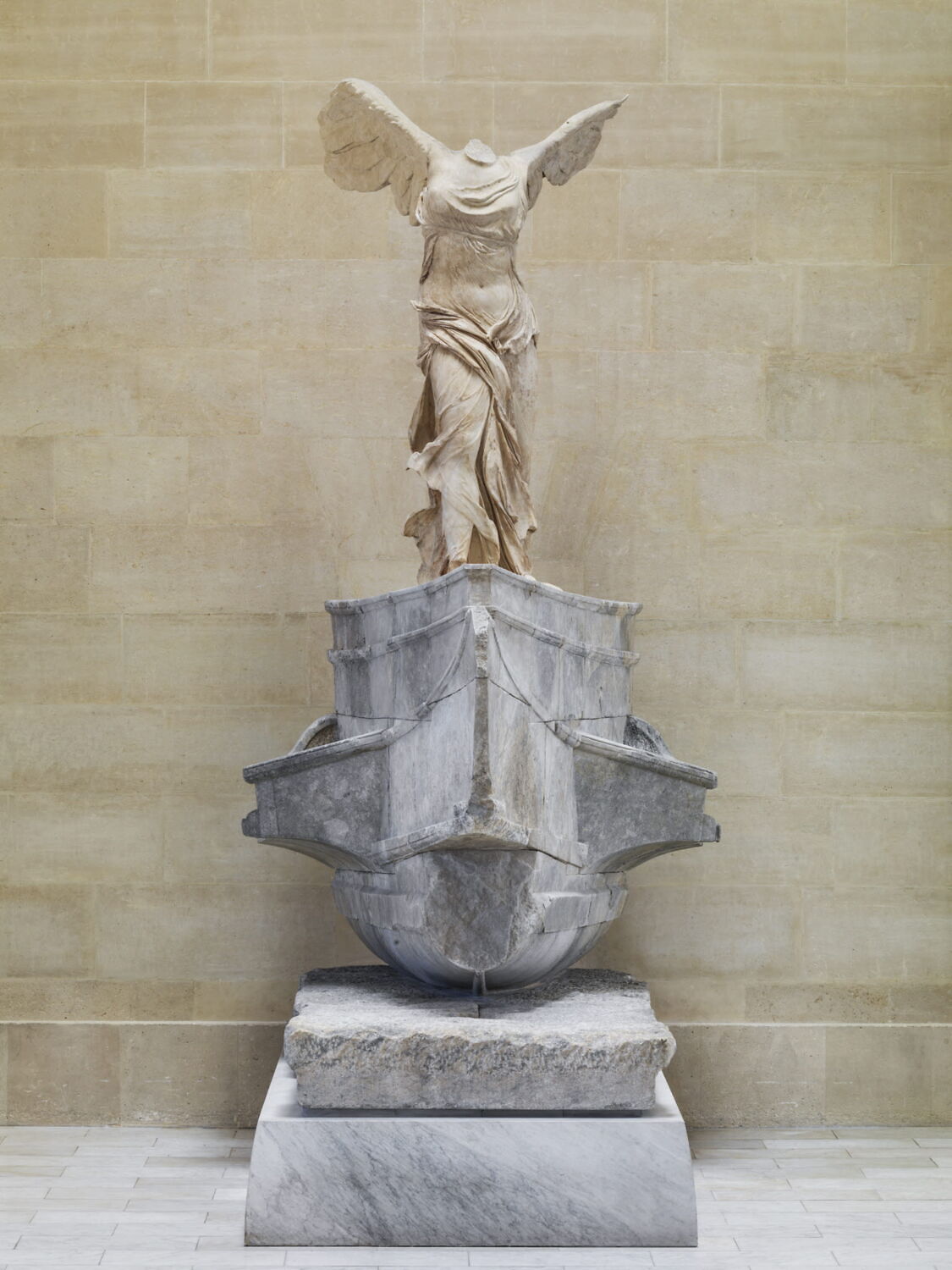
How does stone suggest wind?
Look at the garment over the stomach and legs. Some areas seem pressed against the body, while other folds pull away. You can read this contrast as the effect of air and movement. Find one place where the body is visible beneath the depicted fabric and another where the cloth itself dominates.
Looking at figure and ship together
The prow is more than a neutral support. It changes the setting you imagine for the figure. Picture the same body on a simple rectangular pedestal: what connection to movement over water would disappear? Wings, garment and base contribute together to the overall impression.
An exercise during your visit
Look from a little further away, then move closer. At a distance, notice the silhouette; nearby, study the carved folds. These views complement one another. Use accessible viewpoints and keep circulation routes clear for other visitors.
Artwork record and source
An original Louvr introduction, created with AI assistance. Artwork facts checked against the linked museum catalogue. Interpretations are suggestions for looking. Check the catalogue for the current display location.
Musée du Louvre ↗